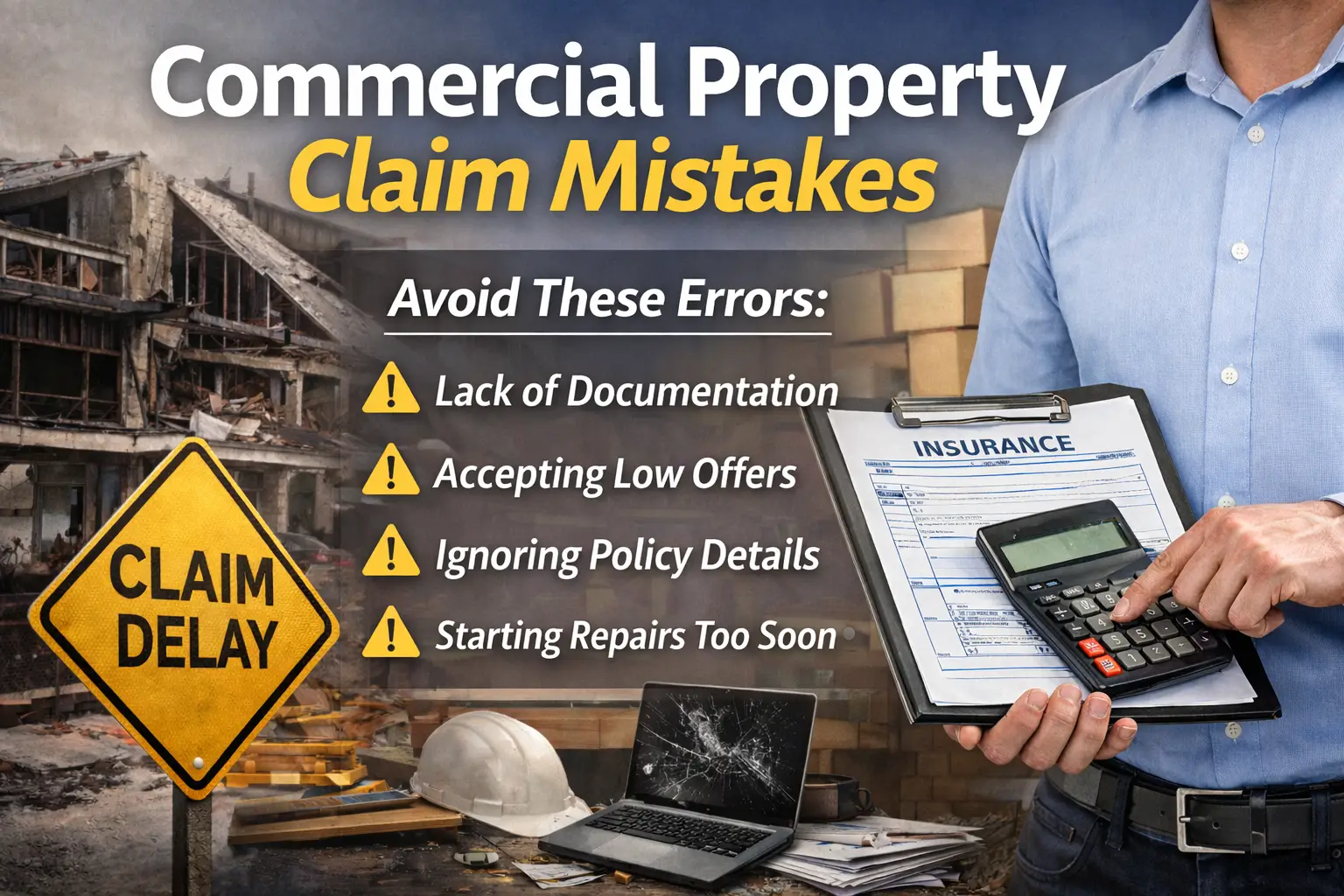
Filing a commercial property insurance claim can be a complex process. When a business experiences damage due to fire, storms, water leaks, vandalism, or other disasters, the goal is to recover financially as quickly as possible. However, many business owners unintentionally make mistakes during the claims process that can delay settlements or reduce the compensation they receive.
Understanding the most common commercial property claim mistakes can help businesses avoid costly errors and ensure their claim is handled correctly.
One of the biggest mistakes businesses make is waiting too long to report damage to their insurance company. Insurance policies often require claims to be reported within a specific time frame.
Why this is a problem:
Best practice:
Report the damage to your insurance provider as soon as possible after the incident.
Insurance companies rely heavily on documentation to evaluate claims. Without proper evidence, it becomes difficult to prove the full extent of the loss.
Common documentation mistakes include:
Best practice:
Take clear photos and videos of all damage and keep records of everything that was affected.
Many business owners file claims without fully understanding what their policy covers.
This can lead to confusion about:
Best practice:
Review your policy carefully so you understand what losses are eligible for compensation.
Insurance companies may present an initial settlement offer based on their own assessment of the damage. In many cases, this offer may not fully reflect the cost of repairs, replacements, or business interruption losses.
Mistake:
Accepting the first offer without reviewing the estimate.
Best practice:
Carefully review the settlement and compare it with contractor estimates before accepting.
A claim may involve multiple conversations with insurance adjusters, contractors, and inspectors. Failing to keep records can cause misunderstandings or disputes later.
Best practice:
Many commercial insurance policies include business interruption coverage, which compensates for lost income when a business cannot operate after a disaster.
Some businesses forget to include:
Best practice:
Calculate all operational losses and include them in the claim.
While emergency repairs are necessary to prevent further damage, beginning large repairs before the insurance adjuster inspects the property can create problems.
Why this matters:
Best practice:
Only perform temporary repairs until the adjuster has inspected the damage.
Large commercial property claims can involve extensive structural damage, inventory loss, equipment replacement, and business interruption. Managing all of this alone can be overwhelming.
Best practice:
For complex claims, consider working with professionals such as:
Commercial property claims are often complicated and require careful attention to detail. Mistakes such as delaying the claim, poor documentation, or accepting low settlement offers can significantly impact the outcome.
By understanding these common mistakes and approaching the claims process strategically, business owners can protect their financial interests and ensure they receive the compensation needed to recover and rebuild their operations.